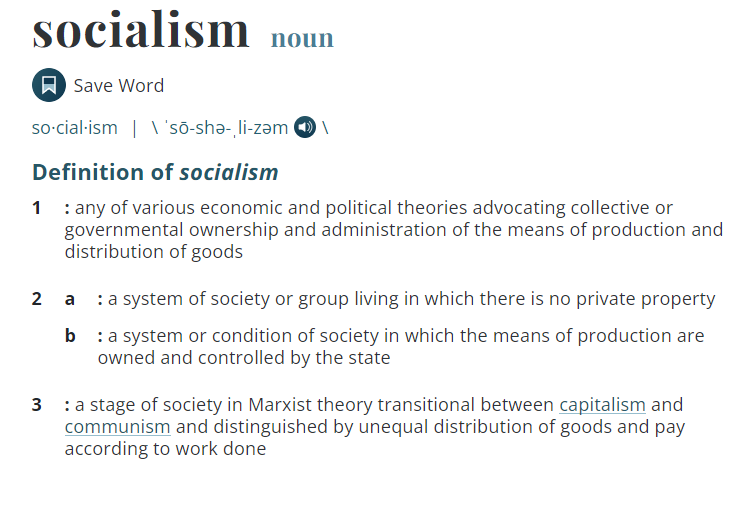
Ken wrote: ↑Tue Aug 09, 2022 8:35 pm
Josh wrote: ↑Tue Aug 09, 2022 6:11 pm
They are not in the middle but rather are a third, rather unexplored category.
In a just world, nearly everything would be provided by nonprofits instead of large, faceless corporations. Think of the difference between a community credit union and a giant megabank.
I guess it is how you define things. I see them in the middle.
A private university like say Harvard isn't government owned and run. It isn't a capitalist money-making enterprise established for the purpose of return on investment by shareholders unlike say University of Phoenix. But Harvard does still compete in the free market for students and research dollars and everything else that a university does. So it is subject to market forces that a subsidized state university might not be but isn't trying to make a profit for shareholders or "capital" By contrast, a small Mennonite school is obviously different and not really in the marketplace at all but more of closed private endeavor.
No serious person thinks that universities aren't giant money making enterprises. It's just a question of whom it makes money for. Harvard provides large amounts of power and influence to the elite. Likewise, state universities tend to have athletics departments with coaches getting million-dollar salaries.
In contrast, a small Mennonite school is not a "closed private endeavour" but rather seeks to serve the community around it, often educating children of people besides just its own sponsoring church's members' children.
I think there is a role for all three in our economy. There are plenty of sectors of the economy that require public investment or very close public regulation in order to operate efficiently and fairly for the benefit of the entire public. Fire fighting, for example. There was no public fire department in ancient Rome. Marcus Crassus, one of the richest Romans in history would show up at buildings on fire in Rome with his platoons of slave firefighters and use extortion to buy up the burning building at "fire sale" prices and only then would he proceed to put the fire out. That is how he built his wealth.
Where I live (and most of America is this way), we are served by volunteer fire departments. The fact Rome had nobody volunteering speaks to the poor character of the Roman people, not the necessity of having government-run fire departments.
There is no need to have government fire departments to put out fires. Volunteer fire departments can do just fine, and in fact it is a sign of health in the community when they are thriving.
On the other hand, large enterprises like airlines or automobile manufacturers are probably best left to the corporations. State-run airlines or auto companies generally don't do well and they are probably too large to run through some sort of community co-op.
I'm not sure I'd agree. The big automobile manufacturers forced through a lot of changes into society that weren't desirable and got so big, they lobbied the government to drive passenger rail out of business so that people would be forced to buy cars or ride buses. I don't think that's good at all.
But I agree that organizations that are smaller and closer to the public like a community credit union are generally better. They are also much more likely to take into account local issues and concerns than a faceless megabank from out of state.
There is really no reason to have gigantic megacorps at all. We end up with "too big to fail" institutions that rob the people blind and pillage the national wealth.