I dunno. The homeless tend not to move around very much and tend not to be in places that put them in close contact with lots of other people such as airports, stadiums, shopping malls, grocery stores. Yes, they are out of the street, but people tend not to get too close to them, much less touch them or touch anything they have touched like you might do in a school or office or grocery store.temporal1 wrote: i wonder how the West coast’s homeless will fare? i imagine it will spread like wildfire.
I think the bigger problems that will exacerbate the spread of coronavirus here in the US are doing to be things like:
1. Lack of paid or unpaid sick leave. The US is the only developed country in the world with no mandatory paid sick leave. In fact, many at-will employees in the US can be fired for not showing up for work when sick. So there will likely be many many sick and infected people in the US who continue to go to their fast food, grocery, and retail jobs to continue to work with food and stay in contact with customers. Do you really trust that the minimum wage worker handling your food in the drive-through is not sick?
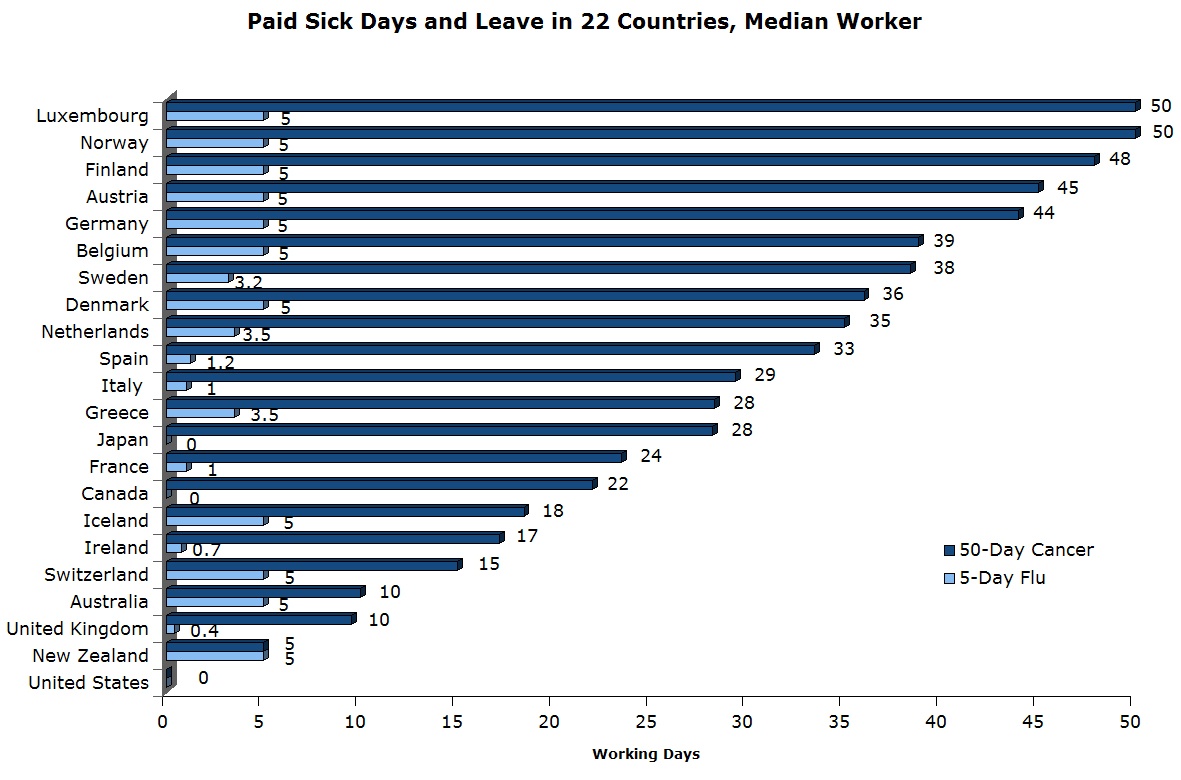
2. Lack of any viable public health system to address the costs of testing, treatment, and quarantine. We are already seeing reports trickling in of patients being charged thousands of dollars for testing, and even being charged thousands of dollars for involuntary hospitalization for observation that they did not agree to or wish to undertake. News of this kind of thing spreads like wildfire, and people who lack insurance, or with high deductible plans are likely to avoid medical care as long as they can. The US medical system is actually DESIGNED to produce this result as a means of cost containment but it is exactly the opposite of what you want in a pandemic situation. Hospitals are sending patients the bills for government-mandated quarantines and testing because there is no place else for them to send them. No government agency set up to pay for this sort of thing. For example:
https://www.nytimes.com/2020/02/29/upsh ... bills.html
Frank Wucinski and his 3-year-old daughter, Annabel, are among the dozens of Americans the government has flown back to the country from Wuhan, China, and put under quarantine to check for signs of coronavirus.
Now they are among what could become a growing number of families hit with surprise medical bills related to government-mandated actions.
Mr. Wucinski, a Pennsylvania native who has lived in China for years, accepted the U.S. government’s offer to evacuate from Wuhan with Annabel in early February as the new coronavirus spread. His wife, who is not an American citizen and remains in China, developed pneumonia that doctors think resulted from Covid-19, the disease caused by the respiratory virus. Her father, whom she helped care for, was infected and recently died.
The first stop for Mr. Wucinski and Annabel was a two-week quarantine at Marine Corps Station Miramar near San Diego. During that time, they had two mandatory stays in an isolation unit at a nearby children’s hospital. The first started upon arrival in the United States, and the second was a few days later, after an official heard Annabel coughing.
“The hospital staff were very nice, they brought us a lot of toys,” Mr. Wucinski said. “Each time it was three or four days. I love my daughter to death, but being in the same room that long, she is not a great conversationalist.”
Both have repeatedly tested negative for the virus.
After their release from quarantine, Mr. Wucinski and his daughter went to stay with his mother in Harrisburg, Pa. That’s where they found a pile of medical bills waiting: $3,918 in charges from hospital doctors, radiologists and an ambulance company.
“I assumed it was all being paid for,” Mr. Wucinski said. “We didn’t have a choice. When the bills showed up, it was just a pit in my stomach, like, ‘How do I pay for this?’”

