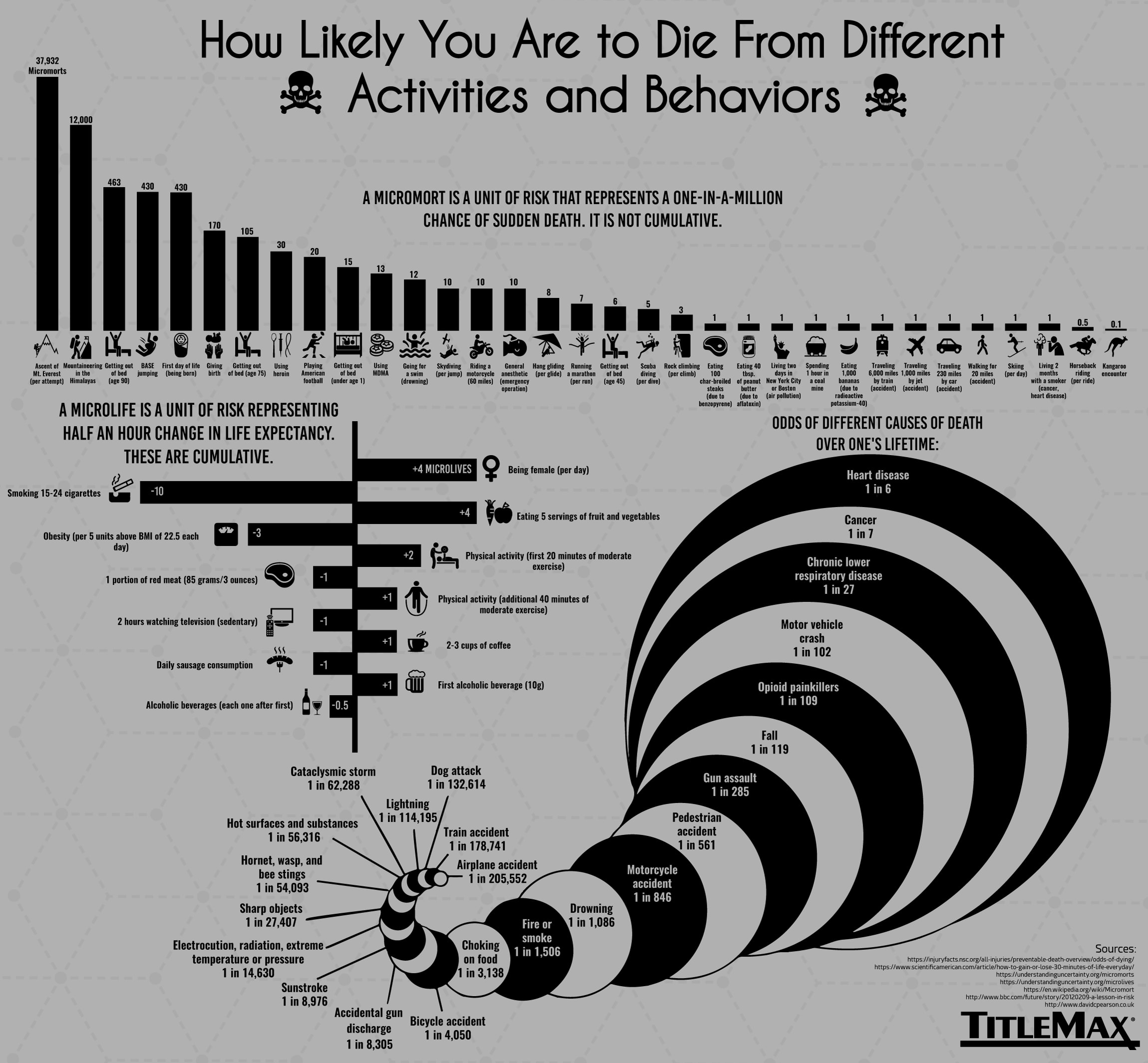
I think this well lays out my problem with the unrelenting drive towards safety in America. Because it only considers safety achieved without counting the cost of that achievement. Appropriate risk is beneficial.
Safetyism’s Cost: When Good Intentions Backfire
What if our efforts to stay safe are actualy kiling thousands more people every year than they save? We’ve always been told to “err on the side of safety,” but could that very instinct be causing far greater harm than the dangers we fear most?
Daniel Kahneman argues in Thinking, Fast and Slow that people are inherently poor at understanding relative statistical risk due to the way our minds rely on quick, intuitive judgments rather than careful analysis. That has caused us to engage in some safety efforts that are counterproductive.
Consider car seat laws. Research shows mandating car seats for older children did save about 57 lives in 2017. But that same year, these mandates discouraged an estimated 8,000 births because many vehicles can’t accommodate three car seats, deterring families from having a third child. Since 1980, this unintended result may have led to 145,000 fewer children born.
Research shows that COVID-era school closures, aiming to keep children "safe" caused substantially more harm than good. Children endured unprecedented learning loss, mental health crises, and billions in projected future economic losses, despite being the demographic least at risk from the virus.
Safetyism's impulse also influenced our response to nuclear energy, driving policies dominated by rare but dramatic fears of nuclear disasters like Chernobyl (1986) and Fukushima (2011). Yet researchers show that shifting away from nuclear power toward coal, oil, and gas has resulted in vastly greater harm. Per kilowatt-hour, nuclear energy causes far fewer deaths than even the safest fossil fuels. On the other hand, the least safe, coal, kils around 350 times more people than nuclear, primarily through routine polution rather than headline-making accidents.
Germany's nuclear phase-out following Fukushima led directly to increased fossil fuel usage, adding roughly 1,100 premature deaths each year. Japan’s post-Fukushima nuclear shutdown similarly caused thousands of excess deaths due to heightened air polution and costly winter heating. Globally, nuclear power had already prevented about 1.8 million deaths between 1971 and 2009 by displacing fossil fuels. Fear-driven anti-nuclear policies, aimed at preventing extremely rare reactor incidents, have likely resulted in tens of thousands of additional deaths already—and milions more could die prematurely by 2050 if these policies persist.
Here are a few more examples:
• Opioid Crackdown: Cracking down on prescription painkillers made addicts switch to deadlier drugs like heroin and fentanyl, increasing overdoses.
• Iraq War: Fearing imaginary weapons led to a war that caused chaos, violence, and strengthened terrorism.
• Afghanistan War: Aimed at preventing terrorism, the lengthy war destabilized Afghanistan and ended with the Taliban back in power.
• Wildfire Suppression: Preventing smal fires for decades built up fuel, leading to massive wildfires.
• Floodwalls in New Orleans: Floodwalls gave false security, amplifying destruction during Hurricane Katrina.
• 1976 Swine Flu Vaccine: Rushed vaccinations against a pandemic that never came caused severe ilnesses and deaths instead.
• Antibiotic Overuse: Overprescribing antibiotics created resistant superbugs, causing untreatable infections.
• Excessive Cleanliness: Over-sanitizing childhood environments increased alergies and asthma due to underdeveloped immune systems.
• Overprotective Parenting: Constant supervision prevented children from developing resilience, leading to increased anxiety.
• Footbal Helmets: Hard helmets designed for protection allowed players to tackle dangerously, causing more severe brain injuries.
• Avoiding Flying after 9/11: Fearful travelers drove instead of flying, unintentionaly causing more deaths from road accidents.
• 2008 Financial Bailouts: Banks took bigger risks believing the government would save them, laying groundwork for future financial crises.
Each case above is based upon clear evidence or a lot of careful study, they are not merely theoretical.
Safety measures can backfire in five main ways.
First, risk compensation means people become careless, believing safety features protect them.
Second, moral hazard arises when protections make individuals or organizations behave recklessly because they aren't facing the full consequences.
Third, unintended consequences happen in complex systems—like ecosystems or societies—when solving one problem creates another.
Fourth, overprotection can weaken resilience, making people or systems vulnerable when eventualy exposed to risk.
Lastly, decisions based on fear often lead to overreaction, trading one danger for an even worse one due to panic-driven decision-making. Understanding these patterns can help us implement safety measures more thoughtfuly and effectively.
Safety is undeniably valuable. But maximal safety, pursued without thoughtfuly weighing ripple effects and trade-offs, frequently backfires. History repeatedly demonstrates that fear-based policies often underestimate human behavior and overestimate their own wisdom, creating greater harm than the risks they sought to avoid.