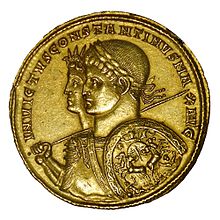
This topic has been visited by many of my fav forum authors.HondurasKeiser wrote:I'd like to come out in favor of both the creeds and Trinitarian theology more specifically. I think it's a mistake to insist that because the creeds failed to mention the life of Jesus that they are in some way flawed, less-than or not valuable. So too it is wrong to assume that because some of the ecumenical councils were presided over by Constantine and involved violent and unchristian machinations that they ought to be ignored; God clearly and repeatedly uses sinful people, even sinful actions for glorifying ends both in the Bible and throughout the history of the Church. As Valerie pointed out, the councils were called to deal with specific heresies that were growing in strength in the early church. As such, they weren't meant to be exhaustive doctrinal or normative statements rather they were written over the course of a number of different councils to combat dangerous conceptions of God and Christ that were held by both pagan and rival, heretical Christian factions. For example, the first stanza of the Nicene Creed states:WE BELIEVE in one God,
the Father, the Almighty,
maker of heaven and earth,
of all that is, seen and unseen.
This was a statement declaring for all the world to see that the Christian God is the creator of everything and that creation is, by extension, good. This was a refutation not so much of Christian heretics but rather of certain influential Greek and Roman pagans that held that the body/physical world was corrupted, worthless and should be thusly denigrated. This may not seem like a pertinent issue now and to modern evangelicals and Anabaptists, it may seem that the creeds represent an over-intellectualizing of the faith to the detriment of praxis and a lived-out faith. I would counter though that the early Church Fathers rightly recognized that ideas have consequences; that if allowed to work themselves out logically and over the course of generations, that these ideas would lead people away from God, away from a saving faith and away from a praxis centered on Jesus. Church history gives us adequate examples of groups that denigrated the body and elevated the spiritual to their detriment e.g. self-flagellation, harmful teachings on sex, refusal of modern medicine, hyper-spiritualization of the faith, Enlightenment focus on the rational, etc. Likewise, it may be fun to denigrate the Trinity, declare it unbiblical and that belief in which is unnecessary for a saving faith, but I encourage you to look at groups of so-called Christians that have rejected an orthodox understanding of the relationship between the Father, Son and Holy Spirit. The Unitarians in New England may have started out nearly indistinguishable from their Calvinist cousins and neighbors but the Unitarian Church today, just a short 150 years later, is universalist in its orientation and decidedly non-Christian in nearly every aspect, including worship and praxis. The Jehovah's Witnesses and Mormons as well declare a bastardized understanding of Jesus' relationship with the Father, and I would posit that such an understanding of Christ as being simply first among God's created order is fundamental and foundational to both groups' theology; as such we rightly recognize them to be outside the bounds of Christianity.
It seems odd to me that conservative Anabaptists are particularly opposed or at best ambivalent about the creeds and their emphasis on getting conceptions about God, however incomplete, correct. All one needs to do is peruse a thread on shifting church standards and the alarm that is raised about "crowding the fence" to see that in the realm of praxis, they rightly understand that if we allow certain thinking to go unchecked that it truly does lead to a slippery slope that slides right out of a distinctive Anabaptism. Praxis though is not First Things, praxis flows out of First Things. Anabaptists insist, and rightly so, that Christianity must be a lived and worked-out faith, a daily dying to self in the practical. If we want to maintain a right living though we must maintain a right thinking about the very foundational notions of our faith. Otherwise our practice and worship will become unmoored from any deeper understanding and will inevitably drift away.

It’s gone beyond my initial marvel at how the Nicene Creed was compiled, word by word, line by line, from scriptures. i did not grow up with creeds, they remain (mysterious) to me. Even tho, in different ways, i’ve known about them and read them for some years now.
But, HondurasKeiser!

This is a welcome surprise.
i’m reading with interest, not ready to attempt a comment or question.