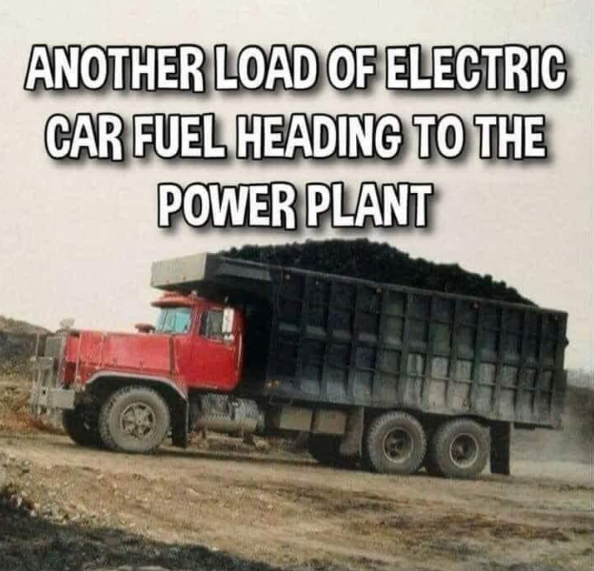
Not unless you live in a backward state like West Virginia. Your state of Texas is at 19% coal and dropping fast. My state of Washington is at 7% coal with the last coal plant scheduled for closure in 2025. On a national level, coal is down to 21% nationally and continuing to drop.
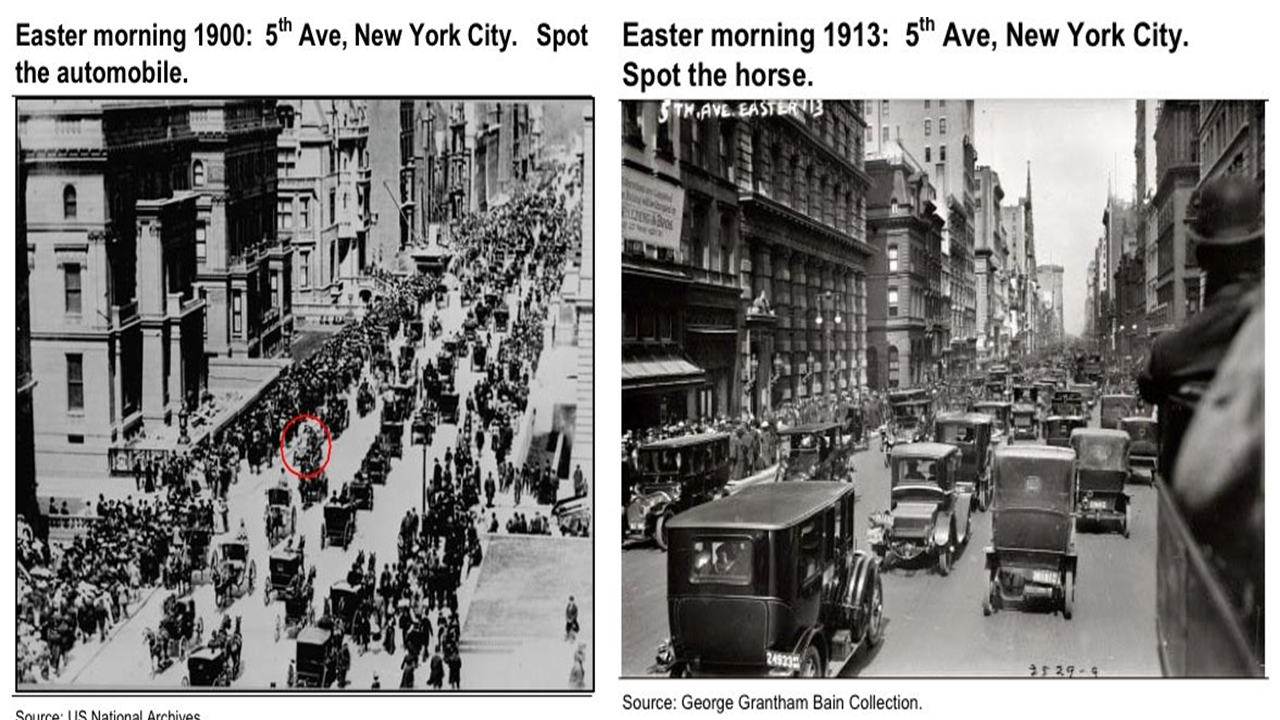
We used to be a country that could manage technological change on a large and rapid scale. Americans basically converted from horses to cars in about 10 years time. There used to be a can-do attitude. Now we seem to be a nation of whiners.
At least today we agree that producing electricity from coal is a bad idea? That is something I guess.
0 x
A fool can throw out more questions than a wise man can answer. -RZehr
Ken wrote: ↑Mon Sep 05, 2022 12:23 pm
Americans basically converted from horses to cars in about 10 years time.
OK. Start the counter as Jan. 01, 1914. (Ford had started the first MOVING assembly line automobile production in December of 1913.) Wikipedia says that by 1929 60% of American families owned an automobile. 60% after 15 years of mass produced automobiles on a moving assembly line. (Actual mass production started at least 10 years before that, with the 1904 Oldsmobile. There may have been other, earlier, mass produced vehicles.)
What percentage of ownership is necessary to say that the conversion to motor vehicles was "basically complete"?
Most Americans living in cities in the early 1900s owned neither horses nor cars. They walked and used streetcars, trains, bicycles, etc.
So the relevant statistic is not the percentage of car ownership. But the ratio of horse drawn vehicles to motor driven vehicles in use in America.
0 x
A fool can throw out more questions than a wise man can answer. -RZehr
Ken wrote: ↑Mon Sep 05, 2022 12:23 pm
Americans basically converted from horses to cars in about 10 years time.
OK. Start the counter as Jan. 01, 1914. (Ford had started the first MOVING assembly line automobile production in December of 1913.) Wikipedia says that by 1929 60% of American families owned an automobile. 60% after 15 years of mass produced automobiles on a moving assembly line. (Actual mass production started at least 10 years before that, with the 1904 Oldsmobile. There may have been other, earlier, mass produced vehicles.)
What percentage of ownership is necessary to say that the conversion to motor vehicles was "basically complete"?
Most Americans living in cities in the early 1900s owned neither horses nor cars. They walked and used streetcars, trains, bicycles, etc.
So the relevant statistic is not the percentage of car ownership. But the ratio of horse drawn vehicles to motor driven vehicles in use in America.
I don't think that NYC should be considered indicative of the entire nation. I think I read someplace that the percentage of Americans who have no motor vehicle available for their private use has changed very little since the 1920's - somewhere around 20% of Americans. In that early period this group was more likely to be in the rural areas of the country, where roads were very primitive, making motor cars an unreliable form of transportation. (My mom recalls taking family trips of around 35 miles one way by wagon, even though my grandpa had a car. Some places were just not yet easily accessible by automobile.) By the 40's public transportation (train and long-distance buses for longer trips, and city buses for transportation from rural areas into the cities) was common-place. My mom worked as a sort of live-away nanny during her teen years, traveling 15-20 miles or so into Tulsa every morning, to get the children dressed, fed, and ready for school, then she did cleaning for the rest of the day until the children returned from school, leaving only when the parents returned at the end of the day. All travel into and from the city by bus. Although that area is now very heavily populated, there in no public transportation of any kind available. The last passenger train ran the last time back when I was still in school, and I never once in my life saw a public bus out in that area.
We can quibble endlessly about definitions of starting points and ending points. The point is that the conversion from horse-drawn transportation to motor driven transportation happened remarkably fast in this country. And a lot of history books say the transition period took more or less a decade. The rise of air travel also happened remarkably fast.
The point is that Americans used to be a people who embraced technological innovation and change. We led the world in new ideas and new technologies. Now it is endless hand-wringing. For example there is a lot of negativity about California's new mandate for all new cars sold to be electric by 2035. That is 13 years away. That is a long time in technological terms. And if there are technological obstacles they can postpone or revise the requirement. That doesn't mean everyone needs an electric car by 2035, just that all NEW ones need to be electric.
The same thing with the transition to clean energy. Coal is a disaster. It isn't just climate change, the particulate pollution from coal is also an enormous public health problem and leads to other environmental issues like acid rain. We should definitely be speeding or transition away from sources of energy that destroy God's creation to those that harness the clean free energy that God already provides in the form of wind and solar.
0 x
A fool can throw out more questions than a wise man can answer. -RZehr
Ken wrote: ↑Mon Sep 05, 2022 6:12 pm
The point is that the conversion from horse-drawn transportation to motor driven transportation happened remarkably fast in this country. And a lot of history books say the transition period took more or less a decade. The rise of air travel also happened remarkably fast.
Neither of which were supported or subsidized by government.
0 x
Try hard not to offend. Try harder not to be offended.
I think I am funnier than I really am.
Ken wrote: ↑Mon Sep 05, 2022 6:12 pm
The point is that the conversion from horse-drawn transportation to motor driven transportation happened remarkably fast in this country. And a lot of history books say the transition period took more or less a decade. The rise of air travel also happened remarkably fast.
Neither of which were supported or subsidized by government.
Of course they were.
Once automobiles became common the United States went on an absolutely MASSIVE highway building binge, first with all the US highways criss-crossing the country and later the interstate highways. Not to mention countless bridges like the Golden Gate Bridge. Highway construction exploded after the end of WW1 and it was the largest single component in the Federal budget through the 1920s until the New Deal and WW2. Before the car people mostly traveled by railroad for anything more than local distances.
Air travel was subsidized by the construction of PUBLIC airports in every city in the country to the tune of hundreds of billions of dollars in todays dollars.
Without public roads and public airports you don't have much in the way of car or air travel. And what you do have will look more like the roads in the Congo.
2 x
A fool can throw out more questions than a wise man can answer. -RZehr
Ken wrote: ↑Mon Sep 05, 2022 6:12 pm
The point is that the conversion from horse-drawn transportation to motor driven transportation happened remarkably fast in this country. And a lot of history books say the transition period took more or less a decade. The rise of air travel also happened remarkably fast.
Neither of which were supported or subsidized by government.
Of course they were.
Once automobiles became common the United States went on an absolutely MASSIVE highway building binge, first with all the US highways criss-crossing the country and later the interstate highways. Not to mention countless bridges like the Golden Gate Bridge. Highway construction exploded after the end of WW1 and it was the largest single component in the Federal budget through the 1920s until the New Deal and WW2. Before the car people mostly traveled by railroad for anything more than local distances.
Air travel was subsidized by the construction of PUBLIC airports in every city in the country to the tune of hundreds of billions of dollars in todays dollars.
Without public roads and public airports you don't have much in the way of car or air travel. And what you do have will look more like the roads in the Congo.
This is not to mention the strategic destruction of public transit in the cities.
Yeah. That was a complicated story. I love trains so I’m sorry we tore most of it out in the 1950s. But we are slowly building some of it back. At least in larger cities.
0 x
A fool can throw out more questions than a wise man can answer. -RZehr