The cape dress: Its origins and evolution over the ages

Christian ethics and theology with an Anabaptist perspective
Post Reply
Ken
Posts: 21863
Joined: Thu Jun 13, 2019 12:02 am
Location: Washington State
Affiliation: former MCUSA

Re: The cape dress: Its origins and evolution over the ages

Post by Ken »

RZehr wrote: ↑Tue Jan 30, 2024 8:37 pm I think it is more respectful and at least every bit as accurate, to refer to the way we dress as a custom instead of costume. To intentionally refer to someone’s cultural or religious attire as a costume, degradingly infers that there is pretend factor to it. I don’t think it is insulting to call it, or ask about it, as a costume in a genuinely curious or ignorant way.

It is our custom. It is our customary way of dress. We aren’t play acting, or pretending, by wearing costumes. We aren’t colonial era re-enactors, nor are we dressing for a Halloween party. We don’t take off our clothes and put on contemporary clothes after our work shift is over, or after our party is done.
This is our full time and only clothes. Sarasota not withstanding.
Here is a definition of costume:
Costume is the distinctive style of dress or cosmetic of an individual or group that reflects class, gender, profession, ethnicity, nationality, activity or epoch. In short costume is a cultural visual of the people.

The term also was traditionally used to describe typical appropriate clothing for certain activities, such as riding costume, swimming costume, dance costume, and evening costume. Appropriate and acceptable costume is subject to changes in fashion and local cultural norms.
There is national costume (e.g. Scottish kilts and tartan, Japanese kimonos, German dirndl, Navajo skirts, Guatemalan huipil)
There is religious costume (nun's habits, priests vestments, Islamic burkas, and I would suggest cape dresses hooks over buttons, plain coats etc.)
And there is theatrical costume.

But if you find the term disrespectful I won't use it.
Last edited by Ken on Tue Jan 30, 2024 9:13 pm, edited 1 time in total.
0 x
A fool can throw out more questions than a wise man can answer. -RZehr
barnhart
Posts: 7728
Joined: Tue Jul 23, 2019 9:59 pm
Location: Brooklyn
Affiliation: Mennonite

Re: The cape dress: Its origins and evolution over the ages

Post by barnhart »

Ken, one feature of all the examples of costume that you raised is a temporary, performative nature. This does not apply to conservative Mennonites who wear it as daily wear.
0 x
Ernie

Re: The cape dress: Its origins and evolution over the ages

Post by Ernie »

Ken wrote: ↑Tue Jan 30, 2024 8:32 pm But I would also frankly not want to be a part of a church where there are elders or bishops who are policing what I wear according to arbitrary made-up customs that are not based on anything Biblical except in a very general sense.
Again, no church that has such customs are interested in having anyone as part of their church who doesn't want such customs. And I don't think anybody on Mennonet thinks that you should be part of a church that has such customs. So I don't know what the problem is.
0 x
Ken
Posts: 21863
Joined: Thu Jun 13, 2019 12:02 am
Location: Washington State
Affiliation: former MCUSA

Re: The cape dress: Its origins and evolution over the ages

Post by Ken »

barnhart wrote: ↑Tue Jan 30, 2024 9:13 pm Ken, one feature of all the examples of costume that you raised is a temporary, performative nature. This does not apply to conservative Mennonites who wear it as daily wear.
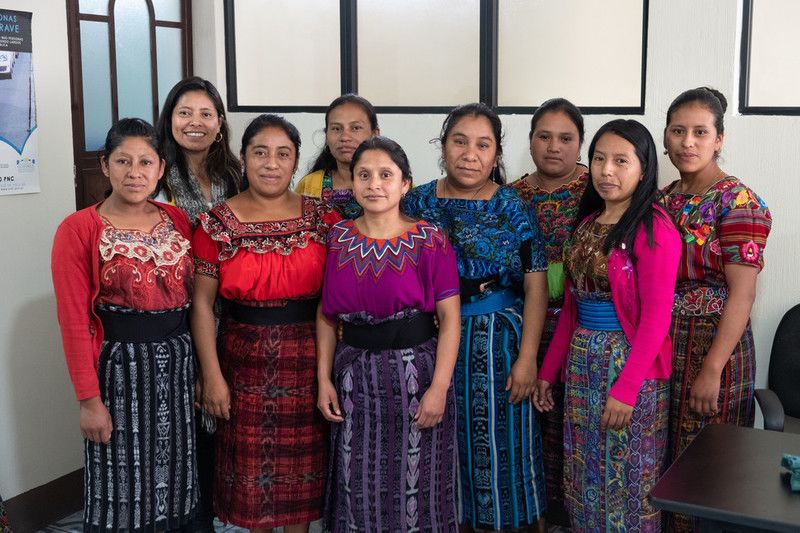
If you guys don't like the word then fine. I won't use it. But although Scottish and German traditional dress has gone out of fashion. There are many other cultural costumes in more traditional societies that have not. The Guatemalan huipil, for example.

Image
Image

Although conservative Anabaptist missionaries working hard to get them to switch over to Menno costume

Image

Which might be one reason why Menno missionaries haven't made a dent but Pentecostals who don't have strict dress rules are exploding like wildfire.
Last edited by Ken on Tue Jan 30, 2024 9:26 pm, edited 1 time in total.
0 x
A fool can throw out more questions than a wise man can answer. -RZehr
Ken
Posts: 21863
Joined: Thu Jun 13, 2019 12:02 am
Location: Washington State
Affiliation: former MCUSA

Re: The cape dress: Its origins and evolution over the ages

Post by Ken »

Ernie wrote: ↑Tue Jan 30, 2024 9:19 pm
Ken wrote: ↑Tue Jan 30, 2024 8:32 pm But I would also frankly not want to be a part of a church where there are elders or bishops who are policing what I wear according to arbitrary made-up customs that are not based on anything Biblical except in a very general sense.
Again, no church that has such customs are interested in having anyone as part of their church who doesn't want such customs. And I don't think anybody on Mennonet thinks that you should be part of a church that has such customs. So I don't know what the problem is.
There is no problem. I think diversity of dress and custom is a good thing. I just object to the notion that it is more Biblical. That is all.
0 x
A fool can throw out more questions than a wise man can answer. -RZehr
Ernie

Re: The cape dress: Its origins and evolution over the ages

Post by Ernie »

Ken wrote: ↑Tue Jan 30, 2024 4:15 pmI have 3 daughters ages 17-25. They all dress modestly in both senses of the term. The two younger ones delight in going "thrifting" and finding great deals in second hand clothing. Normally you'd see them around school or university wearing jeans, sweaters or sweatshirts, with sneakers or boots and fleece or rain jackets. Every bit as modest as any cape dress or more so. They will dress up on occasion but nothing that the average person would consider immodest.
And summer time???
The pilgrim church has never used the perspective of "the average person" to decide what is modest or to determine what makes for good values.
Ken wrote: ↑Tue Jan 30, 2024 4:15 pm Would any of them be interested in joining a conservative Anabaptist church? I doubt it for a long list of reasons but among them is the mandatory uniform which none of them would be interested in.
Most Plain Anabaptists who are walking with the Lord, have no interest in having people join the church, who are not interested in a mandatory uniform. This does limit their "fishing pond" considerably.

But... they don't have to deal with many of the things that American society needs to deal with and are consequently able to raise a good number of their descendants to be people who are walking with the Lord. So in the end, they may be able to help just as many people to walk with the Lord, as those without the mandatory uniform. I think that the majority of spiritually minded Plain Anabaptists should probably keep on doing what they have been doing for centuries. My observation is that most generally lose more than they gain, if they try something different. And by being who they are, they do inspire people all over the world to consider their ways and live more diligently for the Lord, even if few join the Anabaptist churches.

I do believe a few Anabaptists are called by God to break out of the mold and do some things a bit differently then how things are normally done. I believe that those who are truly called by God will be able gain more than they lose if they take up the call of God on their life.
0 x
barnhart
Posts: 7728
Joined: Tue Jul 23, 2019 9:59 pm
Location: Brooklyn
Affiliation: Mennonite

Re: The cape dress: Its origins and evolution over the ages

Post by barnhart »

Ken wrote: ↑Tue Jan 30, 2024 9:21 pm
Although conservative Anabaptist missionaries working hard to get them to switch over to Menno costume

Image

Which might be one reason why Menno missionaries haven't made a dent but Pentecostals who don't have strict dress rules are exploding like wildfire.
I agree with this. Although not the clothing alone but as part of broad scope of cultural practice.
0 x
RZehr

Re: The cape dress: Its origins and evolution over the ages

Post by RZehr »

Ken wrote: ↑Tue Jan 30, 2024 9:09 pm
RZehr wrote: ↑Tue Jan 30, 2024 8:37 pm I think it is more respectful and at least every bit as accurate, to refer to the way we dress as a custom instead of costume. To intentionally refer to someone’s cultural or religious attire as a costume, degradingly implies that there is pretend factor to it. I don’t think it is insulting to call it, or ask about it, as a costume in a genuinely curious or ignorant way.

It is our custom. It is our customary way of dress. We aren’t play acting, or pretending, by wearing costumes. We aren’t colonial era re-enactors, nor are we dressing for a Halloween party. We don’t take off our clothes and put on contemporary clothes after our work shift is over, or after our party is done.
This is our full time and only clothes. Sarasota not withstanding.
Here is a definition of costume:
Costume is the distinctive style of dress or cosmetic of an individual or group that reflects class, gender, profession, ethnicity, nationality, activity or epoch. In short costume is a cultural visual of the people.

The term also was traditionally used to describe typical appropriate clothing for certain activities, such as riding costume, swimming costume, dance costume, and evening costume. Appropriate and acceptable costume is subject to changes in fashion and local cultural norms.
There is national costume (e.g. Scottish kilts and tartan, Japanese kimonos, German dirndl, Navajo skirts, Guatemalan huipil)
There is religious costume (nun's habits, priests vestments, Islamic burkas, and I would suggest cape dresses hooks over buttons, plain coats etc.)
And there is theatrical costume.

But if you find the term disrespectful I won't use it.

Thanks. Like I said I think depending on one’s knowledge on the matter, it could be mildly offensive. Even though it may fit the definition in some sense - which is why I do not say that it is wholly incorrect to call it a costume.

Just now I looked up ChatGPT 3.5’s take on the word in this usage and got this, which resonates with my feelings on the word:
“Referring to someone's clothing as a "costume" can be perceived as offensive, as it may imply that their attire is not typical or appropriate for everyday situations. It might be more respectful to describe it as clothing or attire instead. However, context and the relationship with the person matter, as some situations may involve playful or light-hearted banter where the term "costume" might be acceptable.

Using terms like "outfit" or "attire" can be neutral alternatives when describing someone's clothing. These terms generally avoid any potential negative connotations associated with the word "costume" and are considered more respectful in most contexts.“
0 x
steve-in-kville

Re: The cape dress: Its origins and evolution over the ages

Post by steve-in-kville »

Ken wrote: ↑Tue Jan 30, 2024 4:15 pm
I have 3 daughters ages 17-25. They all dress modestly in both senses of the term. The two younger ones delight in going "thrifting" and finding great deals in second hand clothing. Normally you'd see them around school or university wearing jeans, sweaters or sweatshirts, with sneakers or boots and fleece or rain jackets. Every bit as modest as any cape dress or more so. They will dress up on occasion but nothing that the average person would consider immodest.
I am told there is a fad in the public schools to wear oversized hoodies with any type of printing on them. Are you seeing this on your side of the country, Ken?
0 x
Ernie

Re: The cape dress: Its origins and evolution over the ages

Post by Ernie »

Ken wrote: ↑Tue Jan 30, 2024 9:23 pmThere is no problem. I think diversity of dress and custom is a good thing. I just object to the notion that it is more Biblical. That is all.
And I don't know of anyone who is trying to convince you that German peasant dress of the 16th century is more biblical. I don't understand what point you are trying to make.
0 x
Post Reply