The same applies to audio, for a long time already. Years ago I was recording Bible stories in Banawa. I had a man out to the city to do most of this recording, and didn't do the cleanup work until after he returned to the village. My objective was to have the recording ready for 'distribution' for our next return to the village.
Being a Bible story, there were 'borrowed words' in it. In the case I want to mention it involved the names for two animals that were completely foreign to Amazonian tribal peoples: Sheep and camels. I used the Portuguese words to make up the Banawa words, and came up with kamero for camel, and kaneiro for sheep. I didn't catch it until the man had gone back home, but every instance where he was supposed to say 'kamero' he actually said 'kaneiro'. People don't ride on sheep, so that was a no-go. I had the entire recording in digital form, working in an audio editing program. I experimented with different ways to create the word 'kamero' in his voice, and discovered that I couldn't paste together individual whole syllables to make up the word, because there is too much 'carry over' in the transitions, nearby sounds are altered by what comes before and after. But by cutting up words in the middle of a consonant I was able to create the word I needed. So I made him say something he never said, and the tools I had at that time were rudimentary compared to what is available now. This 'fake' is imperceptible, even when the play back speed is slowed way down.
So you cannot really believe even what you hear, or see.
Can GPT be Reliable?
Re: Can GPT be Reliable?
OpenAI decided to use these guardrails. Grok did not. Even if the big providers have guardrails, someone like me can bypass them fairly easily. But the Grok/Twitter collaboration encourages people to create content based on Tweets, then repost it, and makes it easy to create fake content without any particular expertise. That's worth knowing.Robert wrote: ↑Thu Dec 19, 2024 9:32 am Who gets to decide what the guardrails are? This leads to control. Yes, there needs to be some control, but when GPT was creating images of the founding fathers as African Americans, it shows that something deep down is wrong and they are just building on that "wrongness."
And it's actually easy to measure bias if you can define what you mean. Researchers can do things like measure whether posts from people who identify as Republican are consistently given higher or lower priority than posts from people who identify as Democrats, whether extremist content is promoted at the expense of mainstream content, whether verifiable content is given higher or lower priority than emotional claims embedded in "us vs them" narratives. And they can publish their results so people know what they are getting.
I think the government should require the people who devise these algorithms to provide APIs that make them available to researchers so we can all know what they are doing to us. Both news organizations and university research projects have done this. There are claims that Grok has done things to limit access, but I am not sure if those claims are valid or not. Regardless, we should know how people are manipulating the information we see, and how.
But the government should not decide what is biased or unbiased.
0 x
1. Are we discussing the topic? Good.
2. Are we going around and around in a fight? Let's stop doing that.
3. Is there some serious wrongdoing or relational injury? Let's address that, probably not in public and certainly not for show.
2. Are we going around and around in a fight? Let's stop doing that.
3. Is there some serious wrongdoing or relational injury? Let's address that, probably not in public and certainly not for show.
Re: Can GPT be Reliable?
People get mad even when you try to educate them, they are so convinced. If there were a good way to do it, I could see government regulations telling you if an image was produced using these techniques. Or regulation requiring platforms that serve up this content to also provide user-friendly access to the kinds of tools that can tell you that they are fake so that the users on that platform can sort it out among themselves.mike wrote: ↑Thu Dec 19, 2024 8:47 am What is the point at which people are just responsible for themselves in terms of figuring out whether they are looking at genuine or AI generated content, and where the government or companies just need to let people figure it out for themselves rather than trying to regulate everything? I mean, if people are stupid enough to think that Melania Trump looks like this, then there isn't all that much we can do to help them other than to try to educate them a little, possibly. It seems to me that ChatGPT refusing to return results for certain queries doesn't really make all that much difference.
But the government must not be the arbiter of truth.
This is an innocent use. Imagine using AI to place Trump's face in the crowds on January 6th. I bet that could be done very realistically. Probably too late to do that now, but it could be done in the future. We can generate very realistic videos showing Trump saying whatever words we want to put in his mouth, and people who want to believe it will believe it. The Russians produced a deep fake with Zelensky telling Ukranian troops to surrender to the Russians. Making tools like this available in our social media platforms can help users sort these things out:mike wrote: ↑Thu Dec 19, 2024 8:47 amAI generation of photos and video is by definition the creation of fake media. And yet, drawing a picture yourself, or creating an animation, is essentially the same thing, it's just that a computer does the work. Political cartoonists do this everyday, creating fake caricatures, and not only images but also fake text. It's just that we know exactly what we're looking at when we see a cartoon. AI media is so good already and will only get better, and it will be harder going forward to tell the difference for sure between that and real photos and video, but essentially, isn't AI media basically a tool to create caricatures?
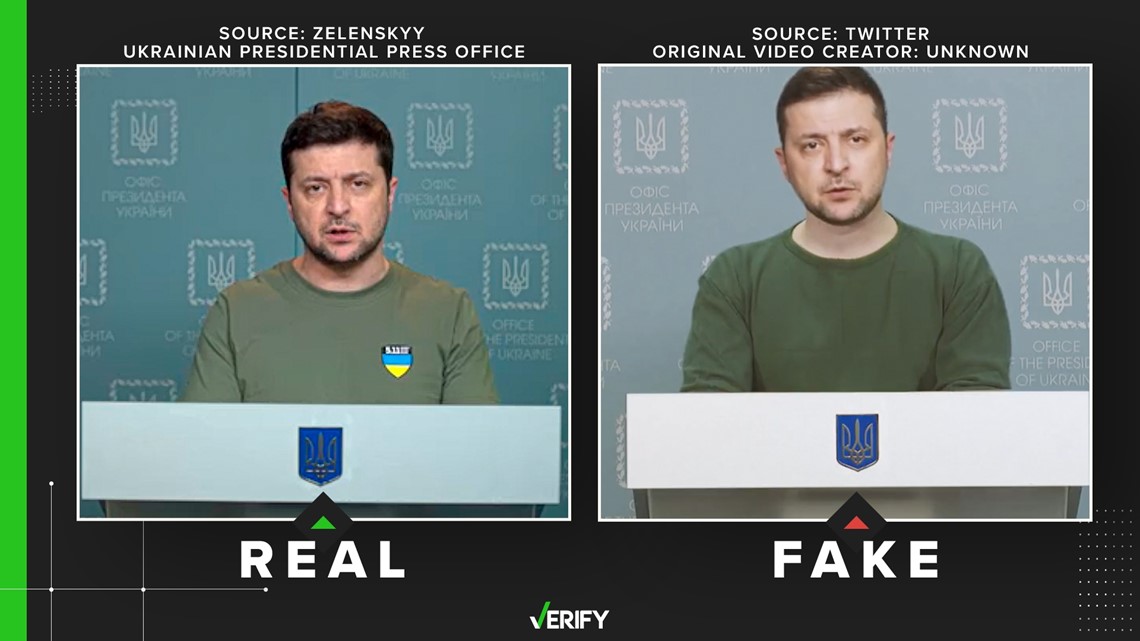
And some of the same tools used to combat AI-generated disinformation could be used for other misinformation and disinformation. In every new military conflict, we see videos from various conflicts over the last 20 years, often on completely different continents, claiming that they reflect atrocities committed by one side or another. If social media platforms were required to provide user-friendly access to tools that can help them identify the original sources of these videos, I think that would be very helpful.
Again, the government should not decide what the truth is, but requiring platforms to give access to tools like that seems reasonable to me.
0 x
1. Are we discussing the topic? Good.
2. Are we going around and around in a fight? Let's stop doing that.
3. Is there some serious wrongdoing or relational injury? Let's address that, probably not in public and certainly not for show.
2. Are we going around and around in a fight? Let's stop doing that.
3. Is there some serious wrongdoing or relational injury? Let's address that, probably not in public and certainly not for show.
-
ken_sylvania
- Posts: 2258
- Joined: Sat Sep 14, 2024 5:41 pm
- Affiliation: Mennonite
Re: Can GPT be Reliable?
Would you support a government requirement that all news sources publicly disclose their sources and their decision-making process in deciding what news to publish and how?
After all, surely if we have a right to know how computers are manipulating us we ought to have the right to know how politicians and newsmen are manipulating us also...
2 x
Re: Can GPT be Reliable?
If you want to maximize government fraud and corruption, that would be a good law, because it would make it very hard for confidential sources to exist. And it would also make it harder for confidential sources to alert us to what our information infrastructure is doing to us. It would also create all kinds of grounds for the government to go after the media and make it dangerous to uncover things that they want to cover up. So no, I would not support that.ken_sylvania wrote: ↑Thu Dec 19, 2024 10:24 amWould you support a government requirement that all news sources publicly disclose their sources and their decision-making process in deciding what news to publish and how?
After all, surely if we have a right to know how computers are manipulating us we ought to have the right to know how politicians and newsmen are manipulating us also...
But I would certainly support laws to require the online versions of newspapers and news stations to provide the same kinds of APIs and tools that I have described here. I don't think that's the same thing.
0 x
1. Are we discussing the topic? Good.
2. Are we going around and around in a fight? Let's stop doing that.
3. Is there some serious wrongdoing or relational injury? Let's address that, probably not in public and certainly not for show.
2. Are we going around and around in a fight? Let's stop doing that.
3. Is there some serious wrongdoing or relational injury? Let's address that, probably not in public and certainly not for show.
Re: Can GPT be Reliable?
In other words, forcing companies to police content. It seems like a real mess once you start down that road. A lot of information is passed around in other ways than social media platforms. Should companies who provide private messaging apps have to do the same? Can it even be done with encrypted messaging? What about phone companies who provide SMS services which can be used to transmit fake content. What about news media organizations who deliver biased or deliberately false content? How much money can a company be expected to expend on these sorts of tools? Who will set the standards? What if the tools don't work correctly? Who is liable? These and many more questions would need to be asked.
I think that companies should be allowed to create tools and standards if they so choose, but should not be forced to or pressured by the government. Then people can utilize platforms and services that they like.
I agree with Robert. If a company doesn't let you create photos using well known political figures, presumably because you may create fake images that will deceive people, but at the same time generates pictures of the founding fathers being African American, that's kinda ridiculous, don't you think?
1 x
Re: Can GPT be Reliable?
I don't think this forces companies to police content. I think it simply forces them to make it less difficult for communities to identify falsehood on their platforms. It will always be harder than creating false content, but it could be made a lot easier than it is. Currently, only very sophisticated people can do this.mike wrote: ↑Thu Dec 19, 2024 10:33 amIn other words, forcing companies to police content. It seems like a real mess once you start down that road. A lot of information is passed around in other ways than social media platforms. Should companies who provide private messaging apps have to do the same? Can it even be done with encrypted messaging? What about phone companies who provide SMS services which can be used to transmit fake content. What about news media organizations who deliver biased or deliberately false content? How much money can a company be expected to expend on these sorts of tools? Who will set the standards? What if the tools don't work correctly? Who is liable? These and many more questions would need to be asked.
Similarly, if people prefer a platform that predictably serves up things tailored to their biases and the emotional states they prefer to be in, nobody is stopping them. If people can measure what it does, and it's the opposite of what they advertise, I don't know if false advertising laws would come into play or not. If so, would that be bad?
With no way of knowing if the platform is intentionally promoting false content over true content or how they are being manipulated.
Creating these APIs and access the tools is cheap and easy for the platforms. They have these tools internally and they use them. The public would probably be upset to know how the sausage is made, but that's the point. People should have the information we need to choose. Communities on a platform should have the tools we need to identify falsehood together where these things are spread. As is, we have the tools to amplify memes and falsehoods, but not to easily identify them.
I would be in favor of platforms that let me create these things, but provide tools that make it really easy for people to know how they were created. Platforms that provide tools to allow us to discern what is true.mike wrote: ↑Thu Dec 19, 2024 10:33 amI agree with Robert. If a company doesn't let you create photos using well known political figures, presumably because you may create fake images that will deceive people, but at the same time generates pictures of the founding fathers being African American, that's kinda ridiculous, don't you think?
0 x
1. Are we discussing the topic? Good.
2. Are we going around and around in a fight? Let's stop doing that.
3. Is there some serious wrongdoing or relational injury? Let's address that, probably not in public and certainly not for show.
2. Are we going around and around in a fight? Let's stop doing that.
3. Is there some serious wrongdoing or relational injury? Let's address that, probably not in public and certainly not for show.
-
JohnL
- Posts: 2790
- Joined: Tue Oct 29, 2024 1:40 pm
- Location: The Bionic Hillbilly
- Affiliation: Free Will Baptist
Re: Can GPT be Reliable?


1 x
Free Will Baptist <-> Anabaptist
”Try hard not to offend. Try harder not to be offended.” Robert Martz
”Try hard not to offend. Try harder not to be offended.” Robert Martz
Re: Can GPT be Reliable?
I think a lot of what is on the internet, including everything from news outlets to social media to general websites and everything in between, is not generally expected to be scientifically accurate. A huge amount of it is just simply entertainment. If reasonable people are looking for what is true, they probably already have sources they know and trust. They take the rest with a grain of salt.Bootstrap wrote: ↑Thu Dec 19, 2024 10:46 amI don't think this forces companies to police content. I think it simply forces them to make it less difficult for communities to identify falsehood on their platforms. It will always be harder than creating false content, but it could be made a lot easier than it is. Currently, only very sophisticated people can do this.mike wrote: ↑Thu Dec 19, 2024 10:33 amIn other words, forcing companies to police content. It seems like a real mess once you start down that road. A lot of information is passed around in other ways than social media platforms. Should companies who provide private messaging apps have to do the same? Can it even be done with encrypted messaging? What about phone companies who provide SMS services which can be used to transmit fake content. What about news media organizations who deliver biased or deliberately false content? How much money can a company be expected to expend on these sorts of tools? Who will set the standards? What if the tools don't work correctly? Who is liable? These and many more questions would need to be asked.
Similarly, if people prefer a platform that predictably serves up things tailored to their biases and the emotional states they prefer to be in, nobody is stopping them. If people can measure what it does, and it's the opposite of what they advertise, I don't know if false advertising laws would come into play or not. If so, would that be bad?
With no way of knowing if the platform is intentionally promoting false content over true content or how they are being manipulated.
Creating these APIs and access the tools is cheap and easy for the platforms. They have these tools internally and they use them. The public would probably be upset to know how the sausage is made, but that's the point. People should have the information we need to choose. Communities on a platform should have the tools we need to identify falsehood together where these things are spread. As is, we have the tools to amplify memes and falsehoods, but not to easily identify them.
I would be in favor of platforms that let me create these things, but provide tools that make it really easy for people to know how they were created. Platforms that provide tools to allow us to discern what is true.mike wrote: ↑Thu Dec 19, 2024 10:33 amI agree with Robert. If a company doesn't let you create photos using well known political figures, presumably because you may create fake images that will deceive people, but at the same time generates pictures of the founding fathers being African American, that's kinda ridiculous, don't you think?
It seems you advocate for putting the burden of choice on the government which could choose to put the burden on companies that provide content or platforms for content. Others advocate for the burden of choice being on the individual, along with whatever consequences that may bring.
0 x
Re: Can GPT be Reliable?
LOL...I agree the photo of Melania looks like something off an Amish romance novel. Amish women have their hair tightly slicked back. Growing up when my hair was out of place my mother would tell me to comb back the "lace curtains". Now the little tendrils of hair hanging down the sides of the face are commonplace for many young women. Even those wearing cap coverings and veils. Just my opinion, but it looks sloppy.

Sorry Robert, way off topic, I know. But the photo of Melania kind of proves that GPT, isn't reliable.
1 x