Rip Currents
Posted: Tue Jul 02, 2024 10:21 pm
Have you ever been caught in a rip current?
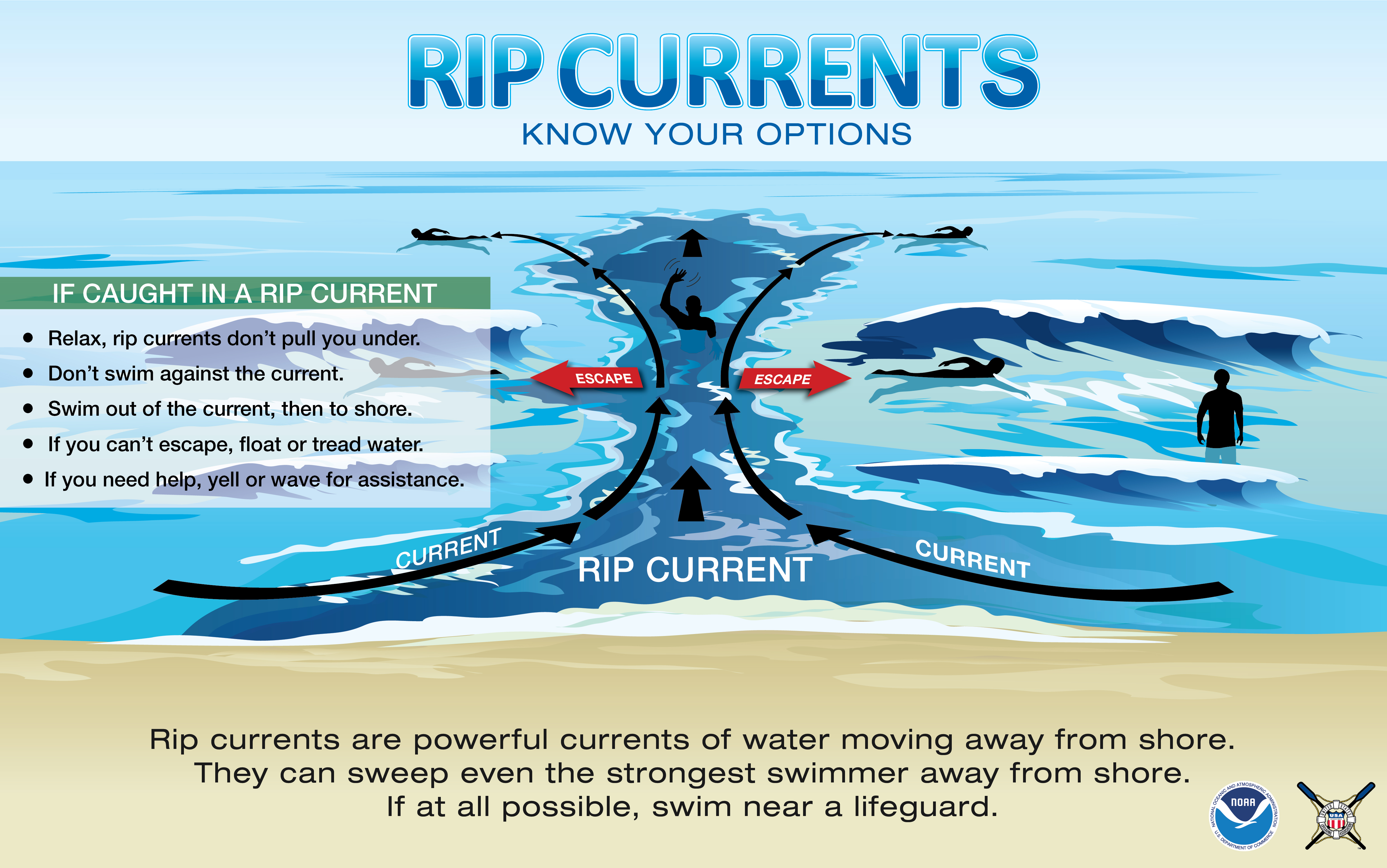
Here is what to do if you get caught...
Here is what to do if you get caught...
https://www.quora.com/If-Im-swimming-an ... hould-I-doThe methods of avoiding being taken out to sea are as follows:
-Swim parallel to the shoreline until you exit the rip. You may encounter a feeder rip or be in a feeder rip that hits the main rips. It does not matter, keep swimming along the shoreline. This may seem like it will take a long time, but rips are generally narrow and dissipate as you reach deeper water, so staying the course is one effective option, but it uses energy you need to get back to shore. Recommended for strong swimmers as a solution as they will likely get out of the rip more quickly. Also recommended in cold water as getting back to shore more quickly to avoid hypothermia is important.
-Keep your head above water and wait it out. You will go further out to sea, but once you are in sufficiently deep water, the rip will fade and you can approach from outside the rip. If the current moved you to one side as well as out toward deep water, you want to be certain not to swim back toward the rip, so try to swim straight in from where the rip faded.
-Do not panic. Use your head and think your way out of the situation. Learn to read the water, learn to recognize rips before you enter the water. There are plenty more videos like these that can help you recognize rips before you encounter them. Some, I can see easily, others can be hidden well by local conditions, but if you look that the water itself, you can see the spots on the beaches where water returns to the ocean.
-Be aware of “long shore currents.” These currents are caused by the incoming waves and will move you along the beach, particularly if you do not have your feet on the ground. “Longshore currents are common at any beach that is exposed to breaking surf. A longshore current is an ocean current that moves parallel to shore. It is caused by large swells sweeping into the shoreline at an angle and pushing water down the length of the beach in one direction.” These currents will eventually take you to a tide rip.