Head covering question

Christian ethics and theology with an Anabaptist perspective
Soloist

Re: Head covering question

Post by Soloist »

Josh wrote: ↑Mon Aug 05, 2024 1:30 pm If the headcovering can be so symbolic that it doesn't need to be done at all, then baptism can be so symbolic that no water is needed. Make sense?
Well, the next logical question then if we’re venturing into head coverings and baptism, how long do you need to be immersed underwater for it to count?
I mean, isn’t it supposed to be symbolizing dying and then a new birth? Maybe a quick dip isn’t long enough. I’m going to start selling scuba equipment for the new baptism method.
1 x
Ken
Posts: 21863
Joined: Thu Jun 13, 2019 12:02 am
Location: Washington State
Affiliation: former MCUSA

Re: Head covering question

Post by Ken »

Josh wrote: ↑Mon Aug 05, 2024 1:30 pm If the headcovering can be so symbolic that it doesn't need to be done at all, then baptism can be so symbolic that no water is needed. Make sense?
But in many Menno circles it is pretty symbolic. That is how people can identify which group a particular woman belongs to from 100 feet away simply by glancing at her covering.

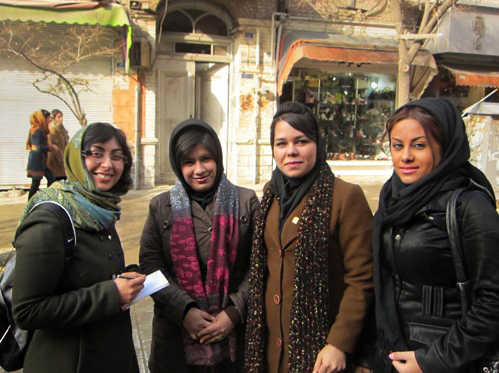
In countries like Iran where they take the teaching literally rather than symbolically, coverings are utilitarian. Women can grab pretty much any random piece of fabric they want in any color or texture and as long as it gets the job done they are fine. No one is fussing about finding that one seamstress who knows how to make a covering cap to some exact obscure specifications. Any random scarf will do.

I very much suspect that was how it was in Biblical times as well.
1 x
A fool can throw out more questions than a wise man can answer. -RZehr
Heirbyadoption

Re: Head covering question

Post by Heirbyadoption »

Ken wrote: ↑Mon Aug 05, 2024 2:31 pm
Josh wrote: ↑Mon Aug 05, 2024 1:30 pmIf the headcovering can be so symbolic that it doesn't need to be done at all, then baptism can be so symbolic that no water is needed. Make sense?
But in many Menno circles it is pretty symbolic. That is how people can identify which group a particular woman belongs to from 100 feet away simply by glancing at her covering.

In countries like Iran where they take the teaching literally rather than symbolically, coverings are utilitarian. Women can grab pretty much any random piece of fabric they want in any color or texture and as long as it gets the job done they are fine. No one is fussing about finding that one seamstress who knows how to make a covering cap to some exact obscure specifications. Any random scarf will do. I very much suspect that was how it was in Biblical times as well.
It might be worth noting that there are a couple types of symbolism in your reference, Ken. One is the Scripturally-defined (or at least implied) symbolism RE headship, whereas the other is a cultural symbolism of denominational identification.
0 x
Sudsy

Re: Head covering question

Post by Sudsy »

Josh wrote: ↑Mon Aug 05, 2024 1:30 pm If the headcovering can be so symbolic that it doesn't need to be done at all, then baptism can be so symbolic that no water is needed. Make sense?
Yes, I would agree. I believe that thousands of Salvationists that have not been baptised in water in any mode will be saved. One can take the Romans 10:9-10 text regarding being saved without water baptism. Some take the Acts 2:38 text to say that if you are not baptised in Jesus name, you are not correctly baptised in water.

Just saying that there are practises that were done in the early church that are not followed today as these practises are considered to not be salvation issues and/or are viewed as a cultural practise of that day. And other practises that are considered salvation issues where the scripture specifically points them out as a practise that one will not inherit eternal life.

Myself, I don't believe things like head coverings, mode of water baptism, formal church membership, speaking in tongues, pacifism and various other beliefs are salvation issues. I consider them more in the area of now seeing through a glass darkly and only knowing all that is true in part.
0 x
Neto

Re: Head covering question

Post by Neto »

Sudsy wrote: ↑Mon Aug 05, 2024 12:48 pm This reminds me of the water baptism mode. Just as when is a head covering a valid practise if it was originally meant to actually covering one's head and when is water baptism a valid practise if it was originally meant to water actually covering the body ?

If these things are mainly symbolic than the exact mode probably doesn't matter. But if they have further meaning such as a woman's hair is her glory and must be covered when praying and prophesying and water baptism is to represent a dying to sin, burying the old man and being raised a new person, then it would seem the mode has importance.

Some would suggest that if we are to take the scriptures in a more literal way on these, then the head covering would literally be covering the entire head and water baptism would require full immersion. Since Anabaptists often emphasize the need to take scriptures as literal as possible, it would seem, for some, but not in these areas.

Any thoughts on this ?
I have given my take on this before, so briefly, there are various figures used to explain baptism:
Sprinkling by the Blood of the Sacrificial Lamb
Out pouring of the Spirit
and, of course, the one you mentioned, being buried and then returning to life through the resurrection of Jesus

Do we want to forget about some of these? I think I may have once (somewhat jokingly) suggested that baptisms should be conducted by doing all of these, while reading the pertinent passages for each:
Spritz (sprinkle) the baptismal candidate
Then Pour a handful (or bowl full) of water over their head
Then put them completely under the water for a bit.

Joking with the above, of course, but there is spiritual meaning for each of these different modes of baptism.
In contrast, there aren't really multiple spiritual meanings given for the uncovered head of the brother, and the covered head of the sister. (If there are, I want to hear them.)
0 x
Ken
Posts: 21863
Joined: Thu Jun 13, 2019 12:02 am
Location: Washington State
Affiliation: former MCUSA

Re: Head covering question

Post by Ken »

Heirbyadoption wrote: ↑Mon Aug 05, 2024 2:47 pm
Ken wrote: ↑Mon Aug 05, 2024 2:31 pm
Josh wrote: ↑Mon Aug 05, 2024 1:30 pmIf the headcovering can be so symbolic that it doesn't need to be done at all, then baptism can be so symbolic that no water is needed. Make sense?
But in many Menno circles it is pretty symbolic. That is how people can identify which group a particular woman belongs to from 100 feet away simply by glancing at her covering.

In countries like Iran where they take the teaching literally rather than symbolically, coverings are utilitarian. Women can grab pretty much any random piece of fabric they want in any color or texture and as long as it gets the job done they are fine. No one is fussing about finding that one seamstress who knows how to make a covering cap to some exact obscure specifications. Any random scarf will do. I very much suspect that was how it was in Biblical times as well.
It might be worth noting that there are a couple types of symbolism in your reference, Ken. One is the Scripturally-defined (or at least implied) symbolism RE headship, whereas the other is a cultural symbolism of denominational identification.
That is kind of my point. In Islamic countries like Iran the dictate for women to cover their hair is literal. They literally mean that women should have their head covered and shouldn't be showing hair. And yes, I understand that they are following the Koran rather than the New Testament so the details of the scriptural commands may be different.

By contrast, Mennonites largely take the command symbolically. The entire head and hair are not covered except perhaps in some of the most conservative groups. So there ends up being a dual symbolism. A symbolic adherence to scripture. But also a symbolic adherence to a specific group.

Note: I don't have any criticism of this. Symbolism is fine and can be important. It is more a comment that you wouldn't hear most Muslim women searching out some obscure seamstress who knows how to make a specific covering that meets specific obscure and non-scriptural requirements. They just grab whatever of a dozen scarves they have in their closet and are good to do. At least that is the case with the Muslim students I have in class. It seems to be mostly whatever color and/or print pattern happens to match the outfit they are wearing.
1 x
A fool can throw out more questions than a wise man can answer. -RZehr
Josh

Re: Head covering question

Post by Josh »

Ken wrote: ↑Mon Aug 05, 2024 4:46 pm That is kind of my point. In Islamic countries like Iran the dictate for women to cover their hair is literal. They literally mean that women should have their head covered and shouldn't be showing hair.
That's not what Iran does. Here is a picture of typical women on the street in Iran:

https://info.umkc.edu/news/reading-wome ... ment/7197/

Image

Here is a picture from Wikipedia:

Image

It has been this way for a long time in Iran. Complete removal of the "headscarf" does invite legal trouble, much as going in public naked would cause me legal trouble if I want and walked around the mall that way.
0 x
Sudsy

Re: Head covering question

Post by Sudsy »

Neto wrote: ↑Mon Aug 05, 2024 3:51 pm In contrast, there aren't really multiple spiritual meanings given for the uncovered head of the brother, and the covered head of the sister. (If there are, I want to hear them.)
This got me thinking about the spiritual meanings that some put on the style of a headcovering. I'm certainly no expert on the subject but isn't there some spiritual or other significance being given to the types and colours of headcoverings ? What about strings or no strings ? Etc.

Could these be 'add ons' to what scripture actually says ? Isn't this what the Pharisees were doing ? From an Internet query -
There were 613 commands in the Old Testament but the Pharisees created over 1,500 additional “fence laws” for the people to obey. They believed the best way to keep people from breaking God's Law was to build a protective barrier around that Law, even though the Lord never told them to do this.
How is the defining of an acceptable head covering different than what the Pharisees were doing with their 1500 additional rules to the 613 OT commands ?
0 x
Josh

Re: Head covering question

Post by Josh »

Sudsy wrote: ↑Mon Aug 05, 2024 7:03 pm
Neto wrote: ↑Mon Aug 05, 2024 3:51 pm In contrast, there aren't really multiple spiritual meanings given for the uncovered head of the brother, and the covered head of the sister. (If there are, I want to hear them.)
This got me thinking about the spiritual meanings that some put on the style of a headcovering. I'm certainly no expert on the subject but isn't there some spiritual or other significance being given to the types and colours of headcoverings ? What about strings or no strings ? Etc.

Could these be 'add ons' to what scripture actually says ? Isn't this what the Pharisees were doing ? From an Internet query -
There were 613 commands in the Old Testament but the Pharisees created over 1,500 additional “fence laws” for the people to obey. They believed the best way to keep people from breaking God's Law was to build a protective barrier around that Law, even though the Lord never told them to do this.
How is the defining of an acceptable head covering different than what the Pharisees were doing with their 1500 additional rules to the 613 OT commands ?
Sudsy,

Do you think we need to obey what the Bible teaches in 1 Corinthians 11, or is it somehow "optional"?
0 x
Sudsy

Re: Head covering question

Post by Sudsy »

Josh wrote: ↑Mon Aug 05, 2024 7:13 pm
Sudsy wrote: ↑Mon Aug 05, 2024 7:03 pm
Neto wrote: ↑Mon Aug 05, 2024 3:51 pm In contrast, there aren't really multiple spiritual meanings given for the uncovered head of the brother, and the covered head of the sister. (If there are, I want to hear them.)
This got me thinking about the spiritual meanings that some put on the style of a headcovering. I'm certainly no expert on the subject but isn't there some spiritual or other significance being given to the types and colours of headcoverings ? What about strings or no strings ? Etc.

Could these be 'add ons' to what scripture actually says ? Isn't this what the Pharisees were doing ? From an Internet query -
There were 613 commands in the Old Testament but the Pharisees created over 1,500 additional “fence laws” for the people to obey. They believed the best way to keep people from breaking God's Law was to build a protective barrier around that Law, even though the Lord never told them to do this.
How is the defining of an acceptable head covering different than what the Pharisees were doing with their 1500 additional rules to the 613 OT commands ?
Sudsy,

Do you think we need to obey what the Bible teaches in 1 Corinthians 11, or is it somehow "optional"?
Do you believe we need to eagerly desire spiritual gifts and men need to pray everwhere with raised hands or is this "optional" ?

But to your question, I believe a woman should seek to know if God wants her to cover her head materially, when and where and with what and that the local church should keep away from requiring specifics on things when the scriptures do not get that specific. I believe a local church should be able to have unity with diversity of practise unless that practise is one in a scriptural list that will keep one from the Kingdom. I don't believe in forced sanctification which, imo, is a hindrance to spiritual growth for each Christian.
0 x
Post Reply