Ken wrote: ↑Mon Jan 03, 2022 9:19 pm
Regarding masks, the Center for Infectious Disease Research and Policy at the University of Minnesota did a comprehensive study of different mask types worn by both the infected person and the person getting infected. Here is the original study from last fall:
https://www.cidrap.umn.edu/news-perspec ... protection
This graphic from the study more or less summarizes the results. Infection times are for the original Alpha variant So the infection times should probably be shortened for the more infectious Omicron. Cloth masks don't do all that much. They reduce infections (or lengthen exposure time by about 25%. Surgical masks reduce infection by about 50% (double the exposure time). But the gold standard are the N95 masks.
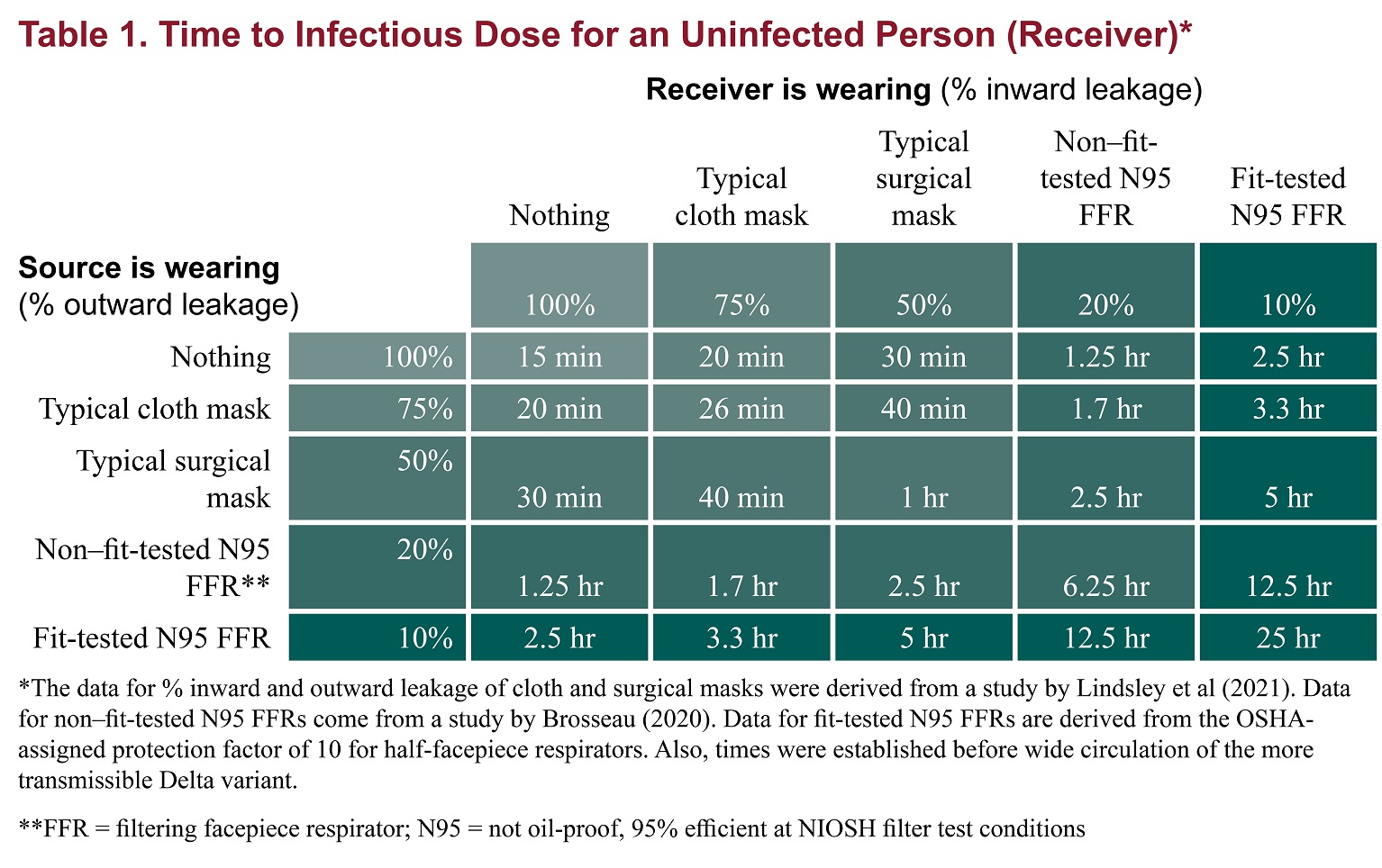
Good chart; the gold standard, however, is N100 or something similar like Soloist wears at work. Very, very few people are actually wearing N95 masks properly.
For example, I saw a family with a child wearing an N95 mask at a state park in Tennessee. It is safe to say it was not "fit tested". She also touched it and adjusted it a few times (a no-no), and then when hiking up and down the hills she just took it off. Taking off and putting back on a mask greatly reduces its later effectiveness. Prior to 2020, you were supposed to treat a facemask like hazardous waste and throw it away as soon as you took it off, and only put on a fresh one.
Doing that with high quality N95 masks is, obviously, not feasible - the average person would go through several per day and would basically have to eat and drink by themselves in a sealed room.
Conclusion: widespread masking isn't feasible. You can do it for a few hours in specialised occupations, like being a surgeon, or like what I wear if mowing the lawn or doing field work to avoid aggravating allergies.

 Now that Delta is no longer the major concern, we can let the debate die a natural death.