Ken, there is no excuse for your sarcasm and rudeness. You are no longer welcome to contribute in this thread.Ken wrote: ↑Wed Jan 11, 2023 12:01 amJosh was being deliberately obtuse. He read the article and knows exactly where the numbers come from and how they are calculated.
Interesting Times
-
MaxPC
Re: Interesting Times
0 x
-
Josh
Re: Interesting Times
Ken, you're flat out wrong here. The publicly stated way to get more revenue was by issuing lots more 1099s, including of people using PayPal at the $600 threshold instead of $20,000. People getting $601 on PayPal are people doing yard sales - not people who are big time tax cheats.Ken wrote: ↑Wed Jan 11, 2023 12:01 amJosh was being deliberately obtuse. He read the article and knows exactly where the numbers come from and how they are calculated. He wasn't trying to make any useful contribution to the discussion. He also knows full well that the IRS isn't hiring agents to go harass people holding yard sales.
It is ridiculous to spend billions of dollars on more IRS agents to go and harass people with business income under $20,000. (Business income from PayPal over $20,000 has already been reported on a 1099 for quite a while.)
Do you really think the answer to America's deficit problems is to hire IRS agents to harass people with business income below $20,000?
0 x
-
Ken
- Posts: 21863
- Joined: Thu Jun 13, 2019 12:02 am
- Location: Washington State
- Affiliation: former MCUSA
Re: Interesting Times
You are making two separate claims, both of them wrong.Josh wrote: ↑Thu Jan 12, 2023 12:27 pmKen, you're flat out wrong here. The publicly stated way to get more revenue was by issuing lots more 1099s, including of people using PayPal at the $600 threshold instead of $20,000. People getting $601 on PayPal are people doing yard sales - not people who are big time tax cheats.Ken wrote: ↑Wed Jan 11, 2023 12:01 amJosh was being deliberately obtuse. He read the article and knows exactly where the numbers come from and how they are calculated. He wasn't trying to make any useful contribution to the discussion. He also knows full well that the IRS isn't hiring agents to go harass people holding yard sales.
It is ridiculous to spend billions of dollars on more IRS agents to go and harass people with business income under $20,000. (Business income from PayPal over $20,000 has already been reported on a 1099 for quite a while.)
Do you really think the answer to America's deficit problems is to hire IRS agents to harass people with business income below $20,000?
First with respect to increased enforcement. The CBO (which is bipartisan or nonpartisan) scored the proposal and looked at the cost of enforcement compared to the increased revenues it would generate. They are not talking about extra 1099s but increasing audits of wealthy taxpayers and corporations. You can go look up the CBO report if you want, they are made public on the CBO web site. The IRS has a LOT of experience with tax compliance and how differing levels of enforcement in each industry and with each income level affect compliance. If you create a graph of tax revenue versus enforcement you get a typical s-curve graph that looks like this
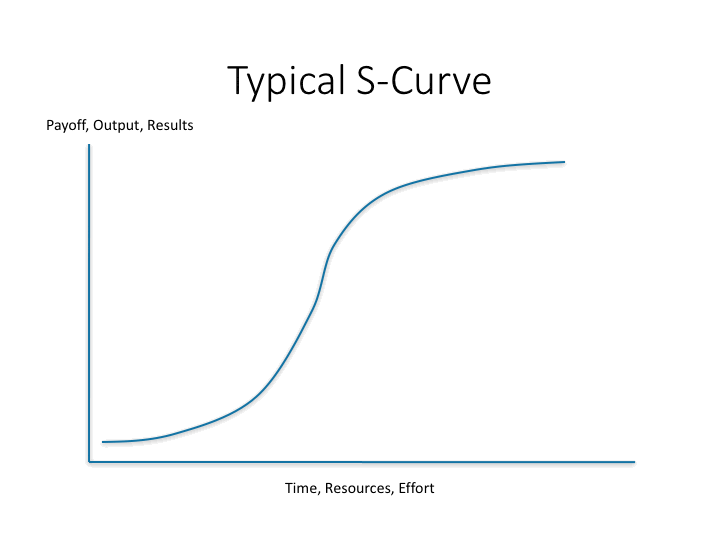
Even with zero enforcement there will still be a lot of revenue because a lot of tax collections are automatic (my employer takes it out automatically) and many people are law abiding and will pay their taxes even without threat of an audit and getting caught. But we know there are a LOT of businesses and people who do cheat. As the chance of getting audited increases, compliance increases for both businesses and individuals and we are on the steep part of the curve. But eventually the curve flattens off at a point where we are close to full compliance and additional enforcement brings in little or no new revenue.
To calculate the net revenues from increased enforcement we need to also graph the cost of increased enforcement which will be a simple line graph since each additional enforcement agent or audit increases cost arithmetically. It will be a straight line graph something like this:
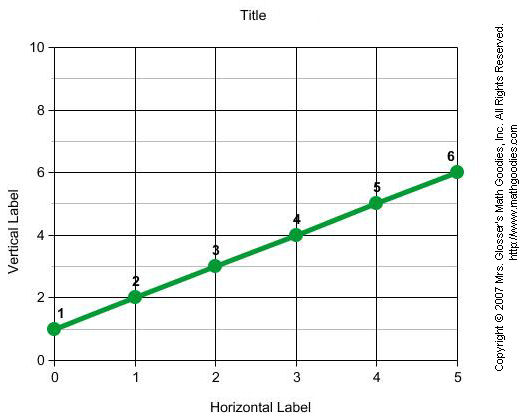
If you combine those functions, the first one which is revenue and the second one which is costs you end up with a graph of the net revenue produced by increasing enforcement. You end up with a typical bell curve where net revenues increase until you reach the optimal level of enforcement and then decrease if you continue to throw additional enforcement at the problem after you get close to full compliance. The optimum level of enforcement is that which produces maximum compliance with minimum cost.
The CBO has actually done this analysis based on years of data collected by the IRS for every industry and category of taxpayer. For example, they audit the fishing industry and know exactly what the average level of compliance is in that industry with X level of enforcement and how much it increases with Y level of enforcement. Same for taxpayers earning $1 million or tax payers earning $10 million. You get the biggest bang for the buck when you start increasing enforcement audits because you not only catch individual tax cheats, but the increased chance of audits motivates a lot of other people to start complying. But eventually after most companies and tax payers are in compliance, additional enforcement doesn't accomplish much.
That is how the CBO can reach the following conclusion:
You can quibble with their assumptions which are all laid out in their analysis. But the basic math is not difficult to understand. If you want an analogy, who is it here on this forum that runs/owns a grocery store? Is that Mike or Steve? What do you think would happen to their net revenues if they got rid of all of their clerks and just left their grocery store doors open to the public for anyone to come in, gather what they want, and then voluntary pay on their way out the door. Their costs would go down with less employees to pay. But I suspect their revenues would decrease much more when people figure out there is no one watching the store and they can carry out whatever they want. That is what the House Republicans are proposing. Sure some honest people would still pay. But in the case of tax compliance, we know there are a LOT of dishonest people out there who will not without enforcement.The Congressional Budget Office (CBO) estimated Monday that the legislation would cut federal spending by $71 billion, but would reduce tax revenue to the tune of almost $186 billion. The net effect would be a $114 billion increase in deficits over the next decade.
As for your second point of hiring IRS agents to harass people with business income below $20,000? If you care to actually look at the IRS provisions that were contained in the recent infrastructure bill you will discover that the vast majority of new hires over the next decade are for (1) customer service representatives to answer the phones when taxpayers call, and (2) to replace people who are retiring or have left the agency. And also that any increased enforcement efforts will be entirely centered on corporations and taxpayers making over $400,000/yr.
The vast majority of Americans actually support increased tax enforcement for wealthy individuals and corporations. It is a very popular proposal. And despite all the sound and fury in the right wing media, most Americans actually view the IRS positively.
0 x
A fool can throw out more questions than a wise man can answer. -RZehr